
Bench Warrant Search in Lauderdale County
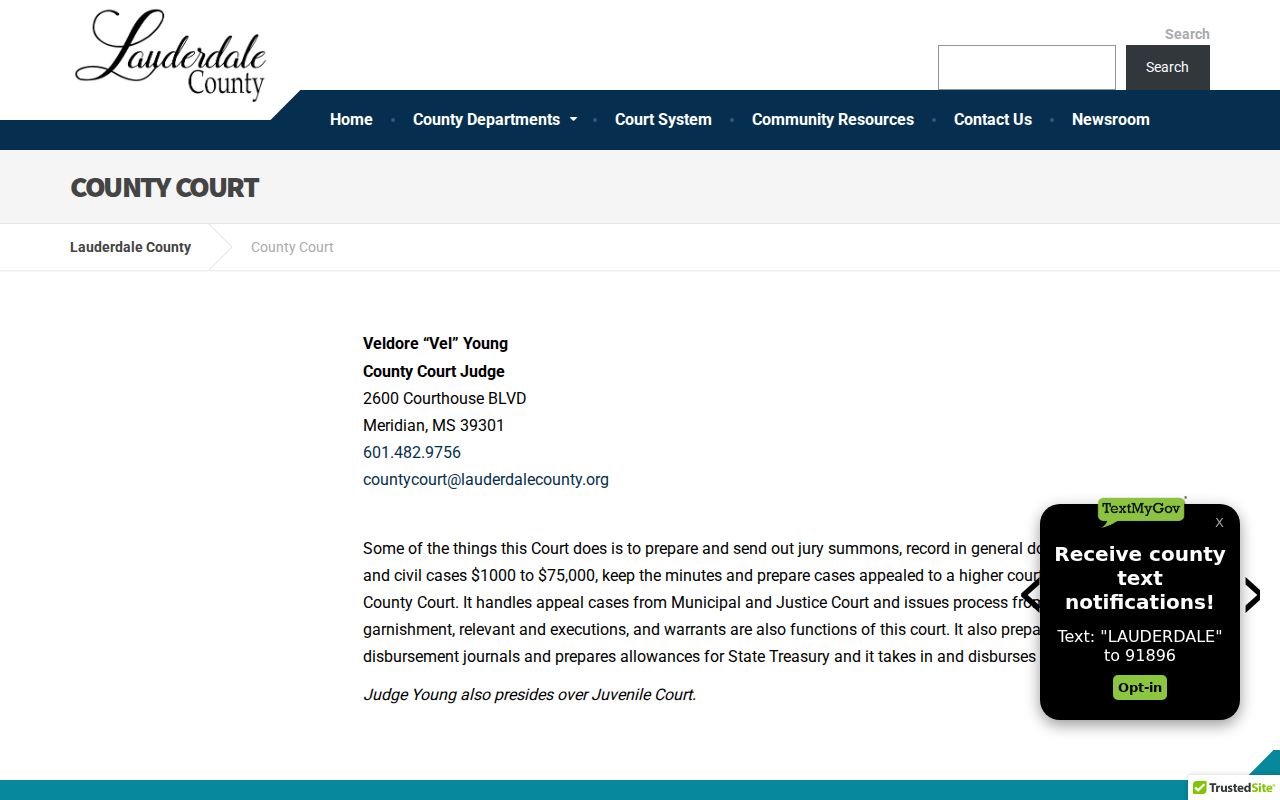
The County Court page describes the court’s process role.
A bench warrant starts with a judge, and the paper trail ends at a desk. Your first call is to the clerk of the court that issued it. Lauderdale County splits its records by issuing authority, so the county clerk, a municipal clerk, or the Sheriff may each hold a piece of the answer depending on which court acted. Pin down that court first. Then use its official clerk or Sheriff channel rather than a third-party site, and ask plainly whether the record is current before you rely on it. Public pages can lag or leave things out. Sealed files, juvenile matters, warrants entered or served days ago, and recalled process may not show. When you do get an answer, hold onto the case number and any written confirmation from the office that keeps the record.
How a Lauderdale County Bench Warrant Is Issued
A bench warrant in Lauderdale County comes from the bench itself. A judge signs one when a person skips a court date or ignores a court order, and from that moment the Sheriff can act on it. Records of these warrants sit with the office that started them, not in one countywide file. Lauderdale County divides its records by issuing authority, so a warrant lookup means knowing which court issued the paper. The circuit clerk, a city clerk, or the Sheriff each answer for their own cases. Ask that office whether its information is current. A public page can omit sealed, juvenile, newly entered, served, or recalled process without any error. Keep the case number, and get written confirmation before you treat the matter as settled.
Bench Warrant vs Arrest Warrant
A bench warrant and an arrest warrant serve different masters. An arrest warrant accuses someone of a crime and asks for an arrest. A bench warrant comes from the court itself, usually after a failure to appear. Lauderdale County records stay divided by issuing authority, so the clerk of the issuing court is the one to confirm which kind you face.
| Feature | Bench Warrant | Arrest Warrant |
|---|---|---|
| Trigger | missed court date / FTA / contempt | probable cause of an offense |
| Who Issues It | the judge from the bench | a judge or magistrate on affidavit |
| Underlying Case | an existing case the person skipped | a new or charged offense |
| How It Clears | appear / recall / quash | surrender / bond / court appearance |
How to Resolve a Bench Warrant
Clearing a bench warrant means dealing with the issuing court directly. Lauderdale County divides records by issuing authority, so call the clerk of that court or the Sheriff and ask what the court wants: an appearance, a bond, or a request to recall the warrant. Get any recall in writing, along with the case number. Public pages may still omit served or recalled process.
- Contact the responsible court or Sheriff office, provide the case identifiers requested, and confirm the current status and next step.
- Contact the responsible court or Sheriff office, provide the case identifiers requested, and confirm the current status and next step.
- Contact the responsible court or Sheriff office, provide the case identifiers requested, and confirm the current status and next step.
- Contact the responsible court or Sheriff office, provide the case identifiers requested, and confirm the current status and next step.
Caution: 15-30 word callout - do not ignore a bench warrant; it does not expire and can lead to arrest at a traffic stop or when applying for a license.
Which Lauderdale County Court Issued It
Which court holds your answer? Lauderdale County records run along lines of issuing authority. A circuit judge, a municipal judge, or a mayor's court can each put a warrant on paper, and each one's clerk keeps that file. The Sheriff may serve the warrant, but the court that issued it controls the record. So before any warrant search, confirm the issuing court and go through its official clerk or Sheriff channel. Ask whether the record is current before you lean on it. Public pages can leave out sealed, juvenile, newly entered, served, or recalled process. A clean search result does not close the question. Keep the case number, and keep any written confirmation the responsible office gives you.